Fashion Manufacturing Trends: Balancing Speed, Sustainability, and Fair Pay in Modern Supply Chains
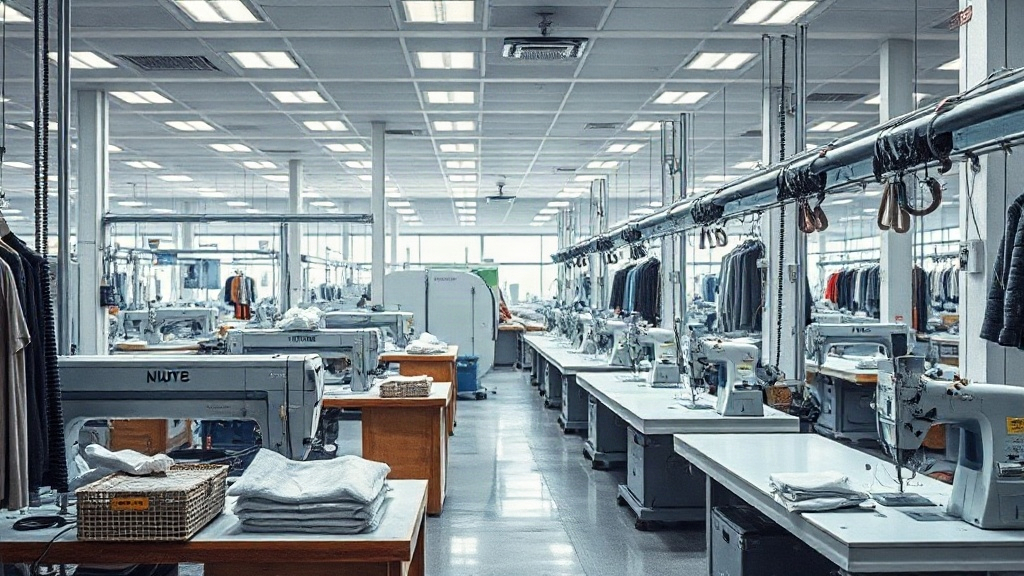
Fashion manufacturing is going through one of its most consequential rethinks in decades. Brands are under pressure to move faster, cut environmental impact, and prove that the people who make their clothes are treated fairly. Those goals don't always point in the same direction, and the tension between them is shaping where and how garments get made today.
The Push to Bring Production Closer to Home
Few ideas have gained as much momentum as reshoring and nearshoring. Recent coverage, including Ohio University's look at the effort to stitch together a manufacturing revival in the United States, reflects growing interest in domestic production. Supply chain shocks, shifting trade policy, and unpredictable freight costs have all made long, offshore-heavy supply chains feel riskier than they once did.
The appeal is easy to understand. Shorter lead times let brands respond to demand instead of guessing months in advance, and that reduces both markdowns and unsold inventory. "Made in" labels also carry marketing weight with shoppers who want transparency.
Still, a revival takes more than good intentions. Skilled sewing labor is scarce in many Western markets, textile mills and trim suppliers have thinned out, and domestic production typically costs more per unit. The most realistic path forward is a hybrid model: high-volume basics made where scale and cost efficiency exist, and small-batch, fast-turn, or premium lines produced closer to the customer.
Speed, Growth, and Sustainability in the Same Breath
Industry analysts, including McKinsey & Company, have argued that apparel manufacturing needs to be reinvented around speed, growth, and sustainability at once. In practice, that means investing in technology and process redesign rather than simply squeezing suppliers harder.
Several approaches are gaining traction:
- Digital product development: 3D design and virtual sampling reduce the number of physical prototypes, saving materials and weeks of back-and-forth. - Automation in cutting and finishing: Automated cutting, laser finishing, and smarter line balancing improve consistency and reduce waste, even though sewing itself remains stubbornly manual. - Demand-driven production: Smaller initial orders with in-season replenishment lower the risk of overproduction, one of the industry's biggest hidden costs. - Material innovation: Recycled fibers, lower-impact dyeing, and waterless finishing are moving from pilot projects toward wider adoption.
The Environmental Reckoning
Fashion's footprint remains a central concern. Discussions led by groups such as the Geneva Environment Network highlight the sector's contributions to greenhouse gas emissions, water use, chemical pollution, and textile waste. Much of that impact is concentrated upstream, in fiber production, wet processing, and energy-intensive factories, which is exactly where manufacturing decisions matter most.
Regulation is also catching up. Extended producer responsibility schemes, stricter due diligence expectations, and digital product passports are pushing brands to know more about what happens inside their supply chains. Companies that can trace materials and document processes are better placed than those relying on vague sustainability claims.
The Unfinished Business of Fair Pay
Environmental progress means little if workers are left behind, and that's why the conversation around living wages has returned to the spotlight. The Business of Fashion recently asked what happened to the industry's living wage commitments, a question that reflects a widely felt gap between public pledges and measurable results on factory floors.
Closing that gap is hard because price pressure runs through the entire system. When brands negotiate costs down while expecting shorter lead times and better compliance, suppliers have little room to raise wages. Meaningful change tends to involve:
1. Transparent costing that separates labor from other price components 2. Longer-term supplier relationships and more reliable order volumes 3. Collective bargaining and worker voice programs that function in practice 4. Independent verification, not just self-reported progress
What Comes Next
The most resilient fashion manufacturers will likely be those that treat these pressures as connected. Faster, smaller-batch production can cut waste. Closer sourcing can improve visibility. Fair wages can reduce turnover and improve quality. The brands that win trust will be the ones that back their claims with data, invest in their supplier base, and accept that cheaper isn't the same as better value.
For shoppers, the shift means more information and more choice, from locally made capsule collections to responsibly produced essentials. For the industry, it's a chance to build a manufacturing model that's faster, cleaner, and fairer all at once.