Fashion Manufacturing in 2025: How Climate Policy, Vertical Integration and Automation Are Reshaping Where Clothes Are Made
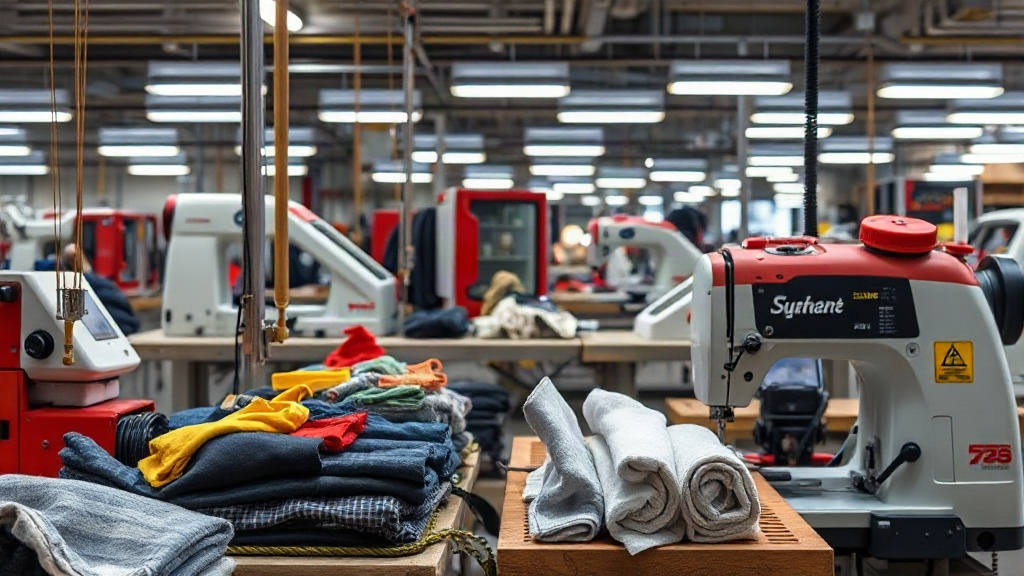
Fashion manufacturing is being pulled in several directions at once. Climate policy is tightening expectations, capital is flowing into large integrated factories, and automation is pushing production closer to the customer. Recent headlines show how these forces are reshaping where and how clothes get made.
Climate Policy Is Moving Closer to the Factory Floor
Ahead of COP31, The Business of Fashion asked what is at stake for the industry. Apparel's footprint comes mostly from the supply chain, especially fabric production, dyeing, finishing and the energy that powers them. Brands can set ambitious targets, but those targets are met or missed in mills and cut-and-sew facilities, many of them in regions that still rely heavily on coal-fired grids.
For manufacturers, this means decarbonization is becoming a commercial requirement. Buyers increasingly want primary data on emissions, credible renewable energy plans and proof of progress. Factories that can supply this information have a clear advantage when contracts are negotiated.
Big Bets on Vertical Integration
Sanko and DBL's plan for a $300 million integrated denim factory in Bangladesh, reported by Textile Today, shows where large-scale investment is heading. Denim is one of the most resource-intensive categories in fashion, with significant demands on water, chemicals and energy. An integrated facility that brings spinning, weaving, finishing and garment production together can offer real efficiency gains.
The benefits of integration are well established:
- Shorter lead times, because fewer handoffs happen between separate suppliers. - Better traceability, since materials and processes sit under one roof. - Easier resource recovery, including water recycling and waste heat capture. - Tighter quality control from fiber to finished garment.
Bangladesh has long been a powerhouse in apparel, and projects of this scale suggest producers want to move up the value chain rather than compete on cut-and-sew pricing alone.
Automation Brings Production Back to the City
At the other end of the spectrum, CoStar reports on a startup bringing automated fashion manufacturing to Manhattan's West Side. Whether it succeeds or not, the idea reflects a broader push to rethink the economics of local production. Automation, digital pattern-making and on-demand workflows aim to reduce the labor-cost gap that drove manufacturing offshore decades ago.
The appeal is easy to see. Producing closer to the point of sale can cut inventory risk, shorten response times and reduce the markdowns that come from guessing demand wrong. Small-batch runs also suit brands that want to test products quickly before committing to large orders.
The challenge is that sewing remains stubbornly difficult to automate. Soft, flexible materials behave unpredictably, and many garments still need skilled human hands. The most realistic near-term model is hybrid: automation for cutting, handling and specific stitching tasks, with trained workers managing complex operations and quality checks.
The Question of Rebuilding Domestic Capacity
WWD recently asked whether British fashion manufacturing can make a comeback, a question that echoes in many Western markets. Domestic production holds obvious appeal: shorter supply lines, stronger provenance stories and lower transport emissions. Yet rebuilding it takes more than enthusiasm.
Skills are the central issue. After years of offshoring, the pool of experienced pattern cutters, machinists and technicians has shrunk. Training programs, apprenticeships and investment in modern equipment are essential, along with fair pricing from brands willing to pay for local quality. Without that commitment, domestic factories struggle to stay viable.
What These Stories Reveal
Taken together, these developments point to a more varied manufacturing landscape. Large integrated hubs in Asia are scaling up with efficiency and sustainability in mind. Local and automated models are testing whether speed and flexibility can offset higher costs. Regulators and climate negotiators are raising the bar for everyone.
For brands, the strategic takeaway is to stop treating sourcing as a single decision. A balanced network can combine high-volume core production in efficient integrated facilities with nearshore or local capacity for fast-turn and premium lines. For manufacturers, investing in clean energy, digital tools and workforce skills is the surest way to stay relevant as the industry's expectations keep rising.
The future of fashion manufacturing will likely belong to those who can prove they are fast, transparent and responsible all at once.